
Definitive Guide
Persian psychedelic rock is not simply Western rock decorated with an “Eastern” instrument. This guide defines the sound through modal movement, microtonal colour, heavy guitar, repetition, studio space, and the long-form listening logic behind ReyTune’s releases and sessions.
What exactly is Persian psychedelic rock?
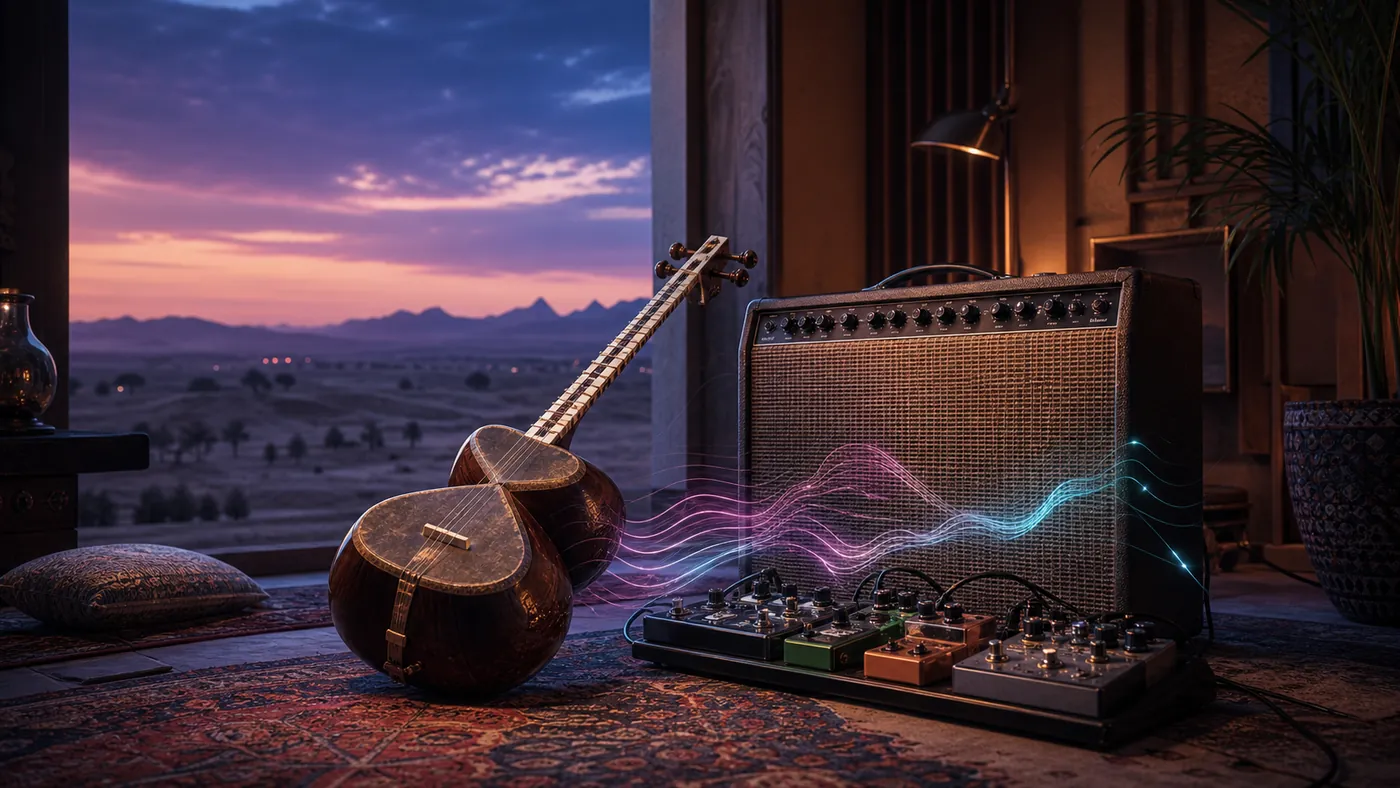
Persian psychedelic rock is a useful working name for rock music in which Persian-rooted melodic behaviour and a psychedelic approach to time, texture and perception are both structurally important. It does not describe one official school, one historical scene or one approved instrumentation. Different artists may reach the intersection through Persian classical material, regional folk traditions, poetry, electronic production, guitar language, or a mixture of these.
The phrase therefore works best as a description of musical decisions, not as a certificate of authenticity. A track can use a tār, setār or santur and still think almost entirely in Western harmonic loops. Another track may use only electric guitar and synthesizer yet preserve a recognizably Persian sense of melodic emphasis, inflection, development and return. The audible structure matters more than the prop list.
This distinction fits the broader history of modern Persian popular music. Encyclopaedia Iranica describes Persian popular music since the 1960s as highly varied, combining material from Persian classical and rural traditions with Arabic, Indian, Russian, European and American genres—including rock. Persian psychedelic rock belongs to that longer history of encounter, but today’s artists assemble the materials with contemporary tools, global distribution and very different production aesthetics.
Why is “rock with Persian instruments” an incomplete definition?
Instrumentation is easy to recognize, which makes it tempting to use as a shortcut. But cultural music is not stored inside an object. A tār can play a melody arranged with no relationship to dastgah, while an electric guitar can bend, dwell, approach and resolve notes in ways informed by Persian phrasing. Neither choice is automatically traditional, and neither is automatically superficial.
A stronger evaluation asks four questions:
- Melodic grammar: Which notes behave as points of emphasis, temporary rest, instability and return?
- Phrase behaviour: Does the melody unfold as a directional journey, or is it a static scale laid over a riff?
- Intonation and ornament: Are bends, slides, attacks and pitch shades intentional and repeatable?
- Context and disclosure: Does the artist name the source, influence and limits without presenting a hybrid as an untouched traditional performance?
These questions do not demand that every hybrid composition reproduce a classical radif performance. They demand clarity. A modern rock work may transform, simplify or depart from inherited practice; the responsible choice is to say what it is doing and allow listeners to hear the difference.
How does Persian modal thinking change a rock track?
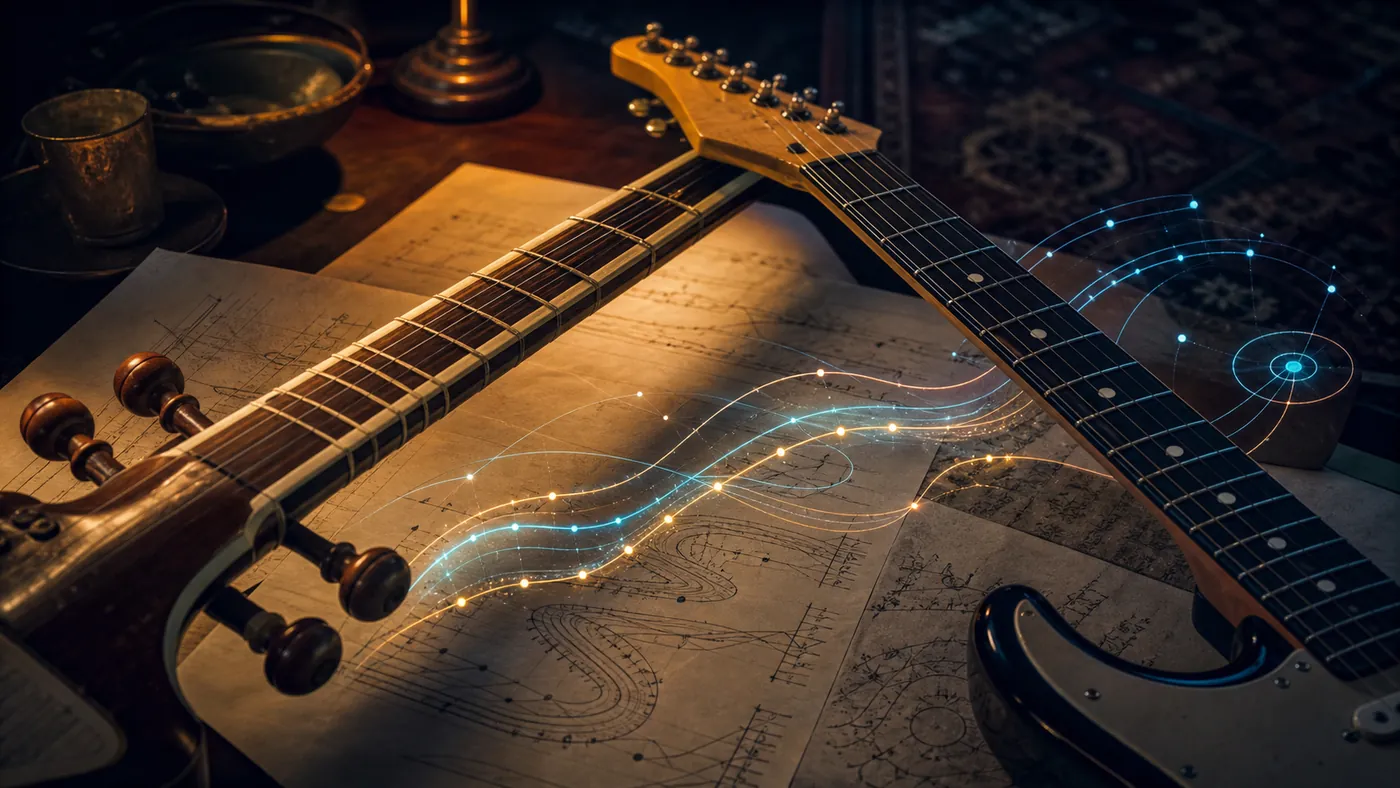
Persian classical music is commonly organized through the radif, a transmitted repertoire of melodic units, and the dastgah system that organizes modal material and paths of development. UNESCO describes the radif as more than 250 melodic units, or gusheh, arranged in cycles and learned as tools for performance and composition. Encyclopaedia Iranica defines a dastgah as a coherent but flexible hierarchy of melodic types organized around a dominant mode—not simply a scale.
That matters for rock because a scale tells you which pitches are available; a modal practice tells you how pitches behave in time. It can influence where a riff feels grounded, which tone functions as a temporary resting point, how a lead line leaves the central area, how intensity is accumulated, and what kind of cadence makes a return convincing.
A four-layer sound architecture
Modal direction
Characteristic tones, melodic emphasis, inflection, tension and forud-like return.
Rock body
Electric guitar, bass, drum kit, riff weight, dynamics and amplified physical impact.
Psychedelic time
Repetition with change, gradual development, sustained attention and altered scale of time.
Studio space
Delay, reverb, saturation, filtering, electronics and depth used as compositional elements.
ReyTune editorial model: the layers can be balanced differently, but removing modal direction reduces the music to generic desert or psychedelic rock.
Consider Afshari, the modal influence named on Mey-e Halâvar. Scholarship does not treat it as a mood preset. Iranica describes Afshari as customarily associated with Shur while also possessing its own modal characteristics and cadence pattern. Translating that into a modern production therefore involves more than selecting “sad” notes. The meaningful work lies in melodic hierarchy, phrase contour, intonation and return.
What makes the sound psychedelic rather than merely heavy?
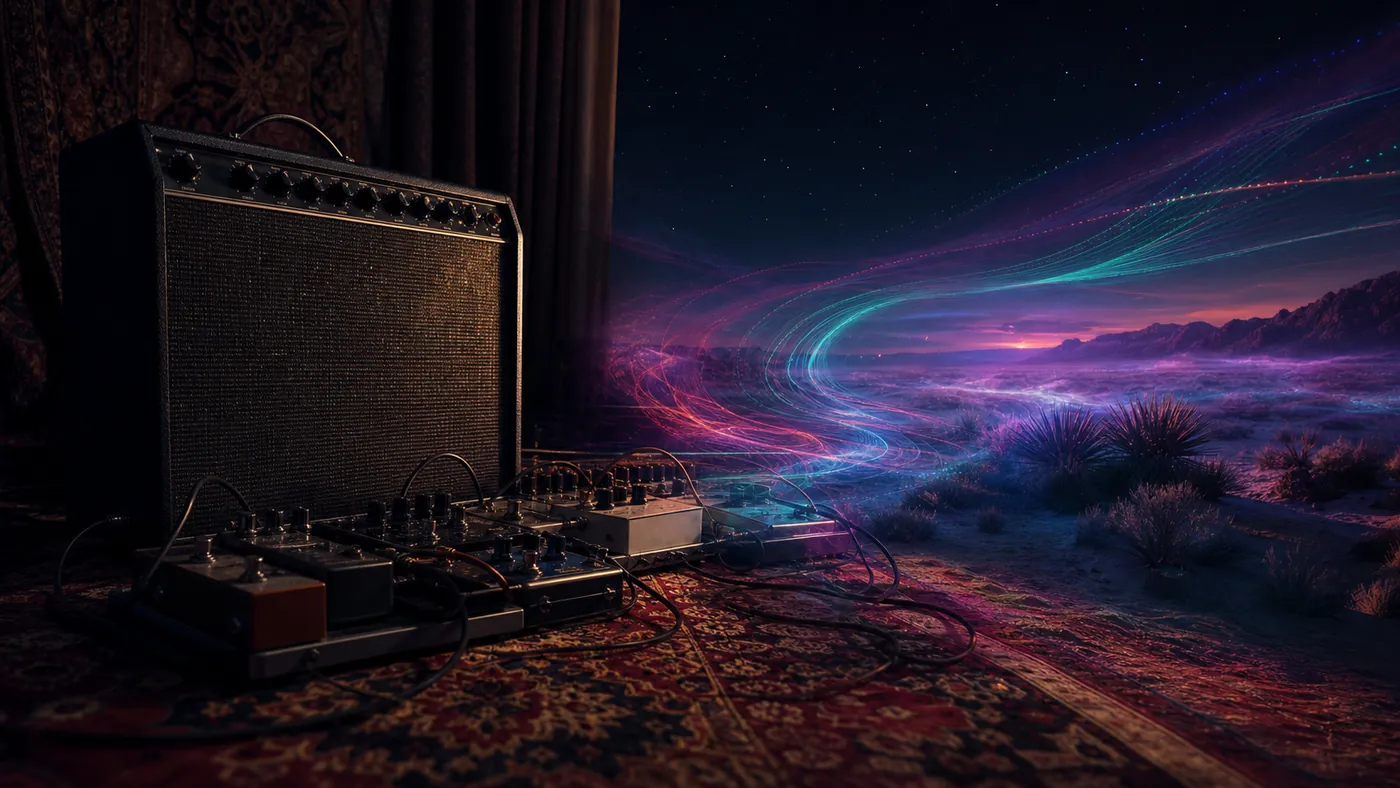
Heavy guitar is a colour; psychedelia is an experience of changing perception. In music, that experience can be built without copying a 1960s template. ReyTune’s approach is most legible through four techniques.
Repetition that changes its meaning
A riff may recur while the bass centre shifts, the drum density grows, an upper voice adds friction or the spatial image widens. The notes can remain familiar while the listener’s relationship to them changes. Repetition becomes a frame for transformation rather than a loop that merely fills time.
Timbre as musical development
Distortion, filtering, feedback, delay and electronic layers can develop like instruments. A phrase introduced with a dry attack may later dissolve into a long echo field; a low drone can gain overtones until it feels less like accompaniment and more like landscape. These are arrangement decisions, not post-production decoration.
Elastic scale of time
Persian melodic practice includes both measured and non-metric domains, while psychedelic rock often permits extended introductions and gradual peaks. A hybrid does not need to imitate free-rhythm avaz, but it can resist the demand for a new hook every few seconds. Long-form sessions make this especially audible.
Spatial depth
A convincing mix creates foreground, middle distance and horizon. Dry percussion may anchor the body while guitar trails and electronic resonance open a larger field. The result should still translate on ordinary speakers; “spacious” is not a synonym for blurred.
How does ReyTune express the form across its catalogue?
ReyTune’s current catalogue offers three entry points: short studio releases, a definitive riff-led single, and long-form audiovisual sessions. The works are related, but they do not make identical claims. The release pages describe the musical influence and instrumentation; the sessions foreground duration, landscape and sustained groove.
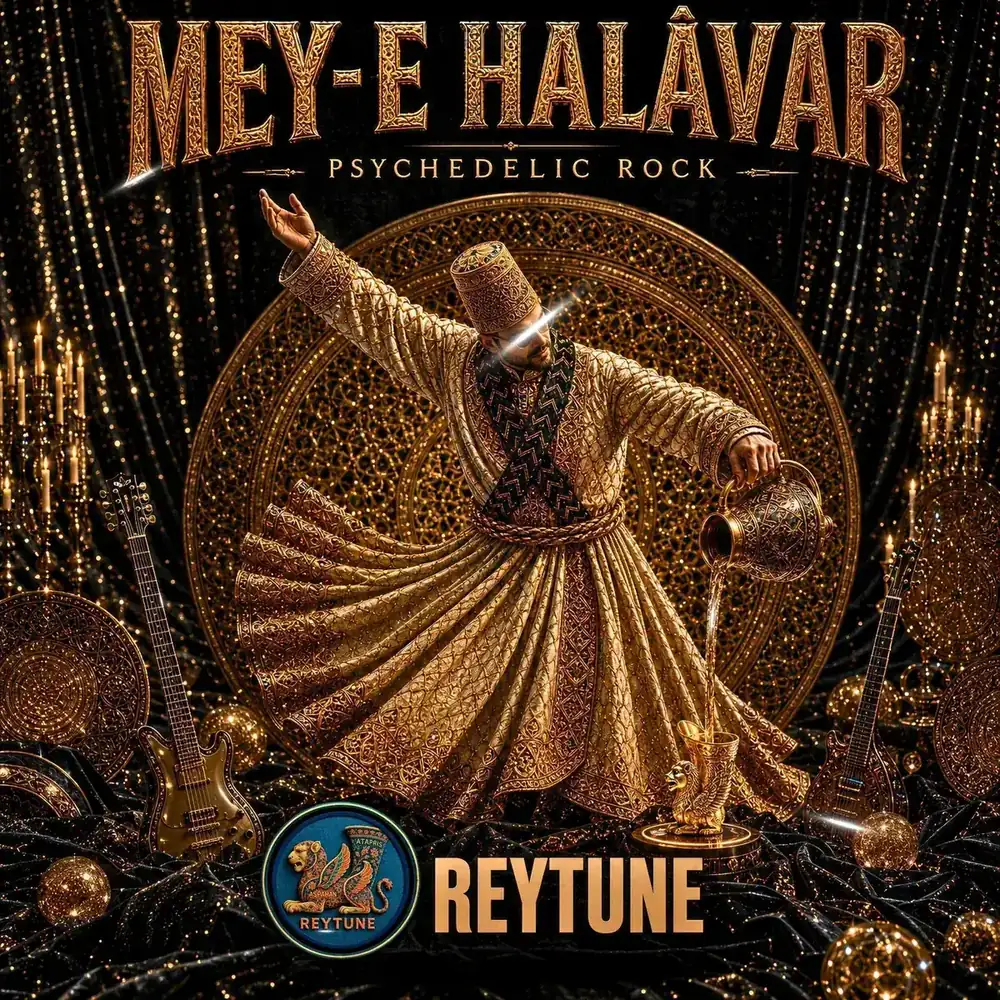
Mey-e Halâvar: modal colour inside a studio single
Mey-e Halâvar is documented by ReyTune as a fully instrumental studio single released June 15, 2026. Its listed materials are electric guitar, bass, drum kit, synthesizer and samples, with Afshari-inspired Persian melodic colour shaping the track’s identity.
The track is a useful first listen because the hybrid is not dependent on a traditional-instrument cameo. The modal reference is carried through melodic colour and phrasing while the body of the sound remains amplified, cinematic and modern.
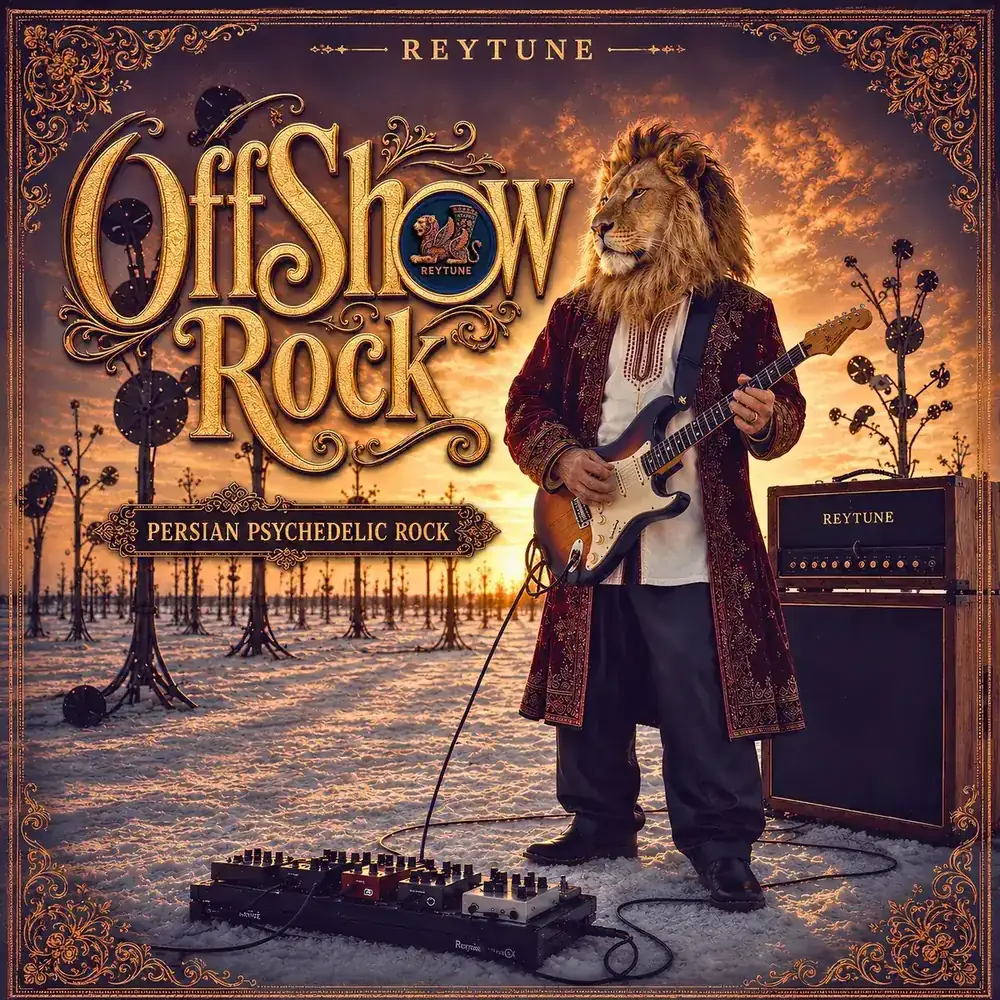
OffShow Rock: the riff as a vehicle for microtonal colour
OffShow Rock is presented as the definitive original version released June 17, 2026, following a 2025 first cut. ReyTune describes it through heavy riffs, microtonal Persian melodic colour and a persistent desert-rock groove.
Here the central question is not whether a guitar can sound “Persian” in isolation. It is whether pitch inflection, riff weight and groove form one vocabulary. The definitive version also makes arrangement part of the story: a musical identity is not only a motif, but the complete arc built around it.
What do the long-form sessions reveal?
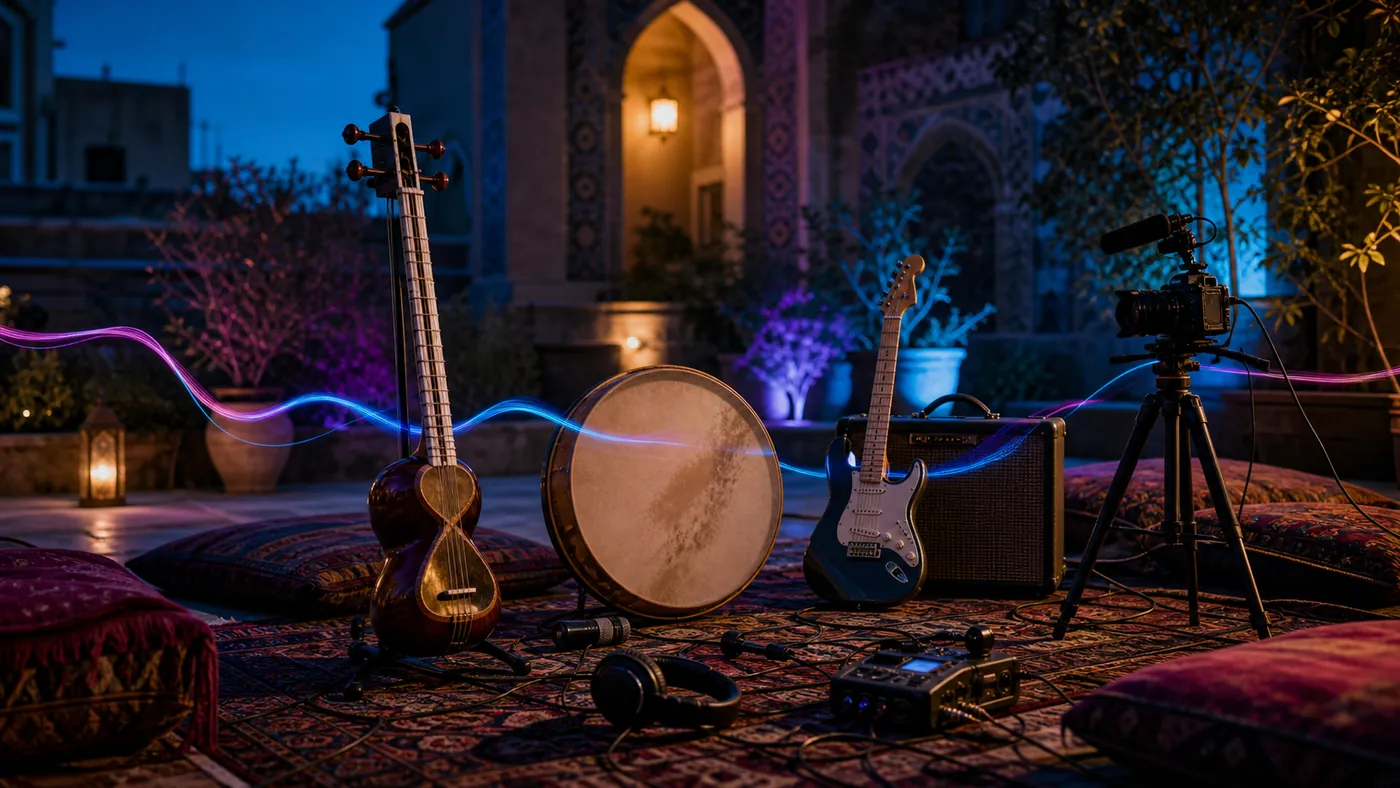
A three- or four-minute single proves that a sound can be concise. A sixty-minute session tests whether it can sustain attention. ReyTune’s Videos & Sessions collection documents multiple long-form works alongside a shorter Rumi-focused electronic video. The sessions are not presented as strict classical performances; they are contemporary Persian psychedelic and desert-rock journeys.
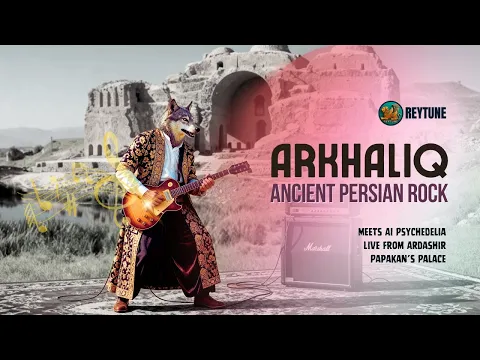
Ardashir Palace Session (Arkhaliq) — 60:14
Listen for how groove and texture take responsibility for continuity when a standard single structure is removed.
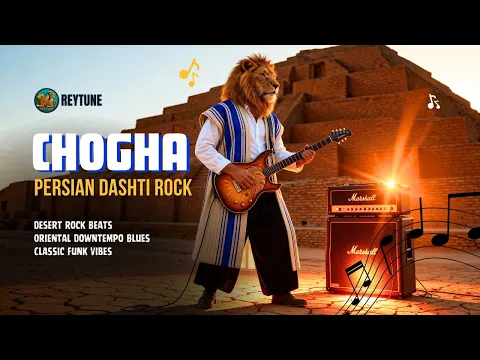
Chogha Desert Rock — 40:00
Focus on the relationship between downtempo pulse, desert-rock weight and gradual timbral variation.
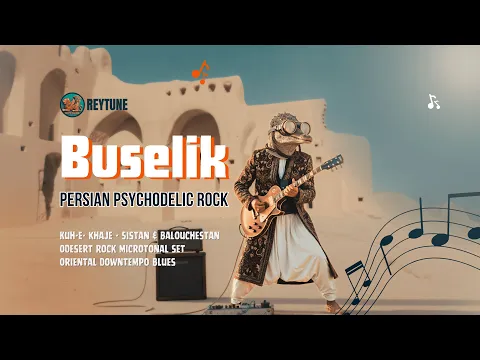
Buselik at Mount Khajeh — 60:00
Track the long energy curve: orientation, accumulation, peak and return rather than isolated “best moments.”
The most useful way to hear these works is not to ask whether every minute introduces a new theme. Ask whether each recurrence changes the field: density, register, saturation, rhythmic emphasis, stereo depth or melodic focus. Long duration magnifies weak decisions, but it also creates room for states that a single cannot reach.
How should a new listener approach Persian psychedelic rock?
Start with one concise work, then move outward. This sequence keeps the genre label from doing the listening for you.
- Hear the centre. In the opening minute, identify the tone or register that feels like home. Do not worry about naming the mode yet.
- Follow the melody, not only the riff. Notice repeated approach notes, bends, ornaments and temporary resting points.
- Track transformation. When material repeats, name what changed: articulation, bass, drum density, effects, register or harmony.
- Wait for the return. A convincing resolution may be melodic or timbral rather than a Western dominant-to-tonic cadence.
- Compare formats. Hear Mey-e Halâvar, then one long session. The shared identity should survive the change in duration.
- Read the disclosure. Separate documented influence, production fact and editorial interpretation.
What is Persian psychedelic rock—and what is it not?
| Form | Primary logic | What may overlap | What should not be assumed |
|---|---|---|---|
| Persian classical performance | Radif-informed modal development, improvisation and established performance practice | Melodic types, intonation, ornament, poetic and expressive context | That a rock hybrid is a classical dastgah performance |
| Broader Persian rock | Broad rock practice connected to Persian-heritage artists, language or culture | Guitar, poetry, popular-song forms, traditional and regional influences | That all Persian rock is psychedelic or modal |
| Desert rock | Heavy groove, dry or expansive atmosphere, riff-led weight | Repetition, fuzz, cinematic space and landscape associations | That “desert” proves a Persian cultural relationship |
| Persian psychedelic rock | Persian-rooted melodic identity combined with psychedelic transformation and rock energy | All of the above, depending on the work | That a single instrument, scale or visual motif guarantees depth |
Where do poetry and electronic production fit?

Persian-rooted psychedelia is not limited to instrumental guitar music. Poetry can provide structure, image and philosophical tension, while electronic production can extend repetition and spatial transformation beyond a conventional band arrangement. ReyTune’s release hub identifies Bito Besar Nemishavad Rumi as the debut single built around a Rumi ghazal, alongside Shah Sanam and the later rock-focused releases. These works widen the catalogue’s centre of gravity rather than forcing every track into the same sonic template.
The useful distinction is between setting a Persian text and using poetry as cultural atmosphere. A responsible setting identifies the poem or attributed source, handles translation carefully, and lets the text affect pacing, emphasis and form. Decorative fragments of calligraphy or generic references to Sufism do not provide the same relationship.
Electronic production can also be psychedelic without imitating guitar effects. A repeated vocal cell can change through filtering and spatial movement; a pulse can acquire weight through layered percussion; a poem can reappear at different levels of intelligibility. The 3:13 video Rumi Never Died shows this adjacent strand of ReyTune’s work: an EDM-scale immersion connected to the poet rather than a long-form desert-rock session.
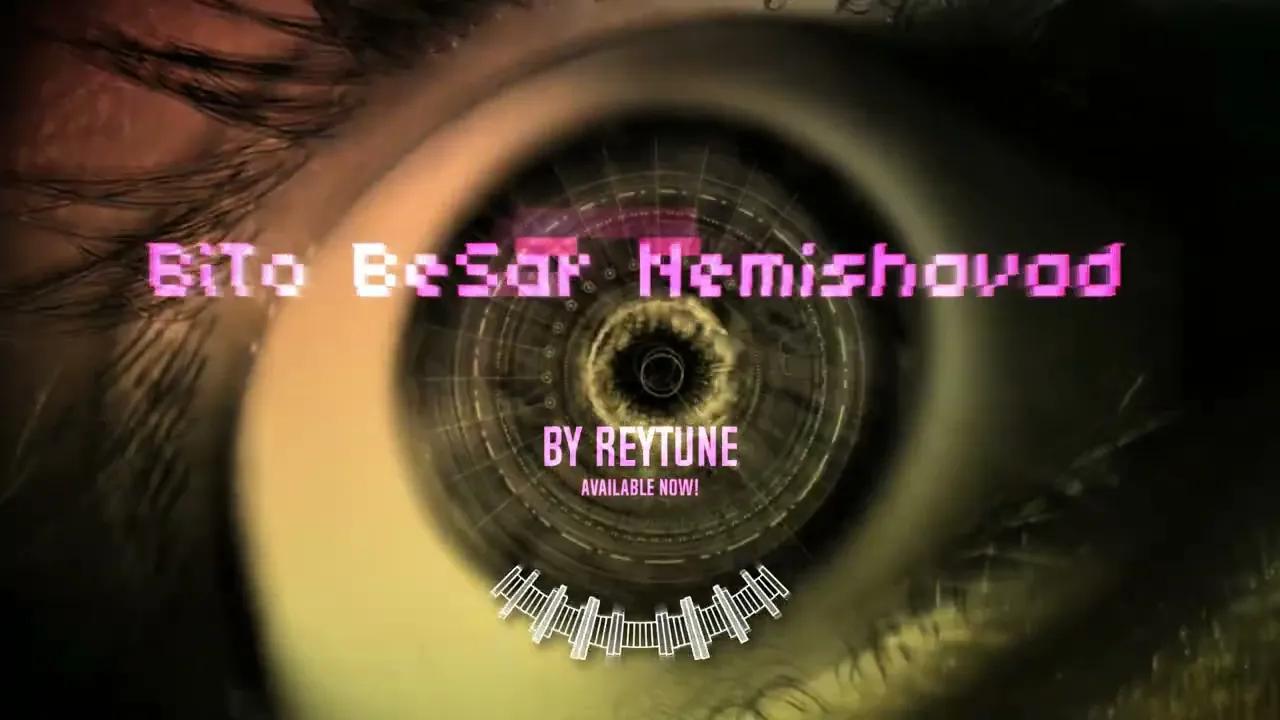
Rumi Never Died (03:13) — official ReyTune video. Poetry and electronic repetition form a parallel route into Persian-rooted psychedelia (see also Psychedelic Rock & Persian Rituals).
This broader view matters for the ReyTune catalogue. The shared project identity is not one guitar tone or one tempo. It is the attempt to carry Persian melodic, poetic and cultural reference into contemporary forms while keeping the source relationship visible. Future deep dives should evaluate each release on its own evidence rather than retrofitting a single formula to the entire catalogue.
How can a hybrid remain culturally responsible?
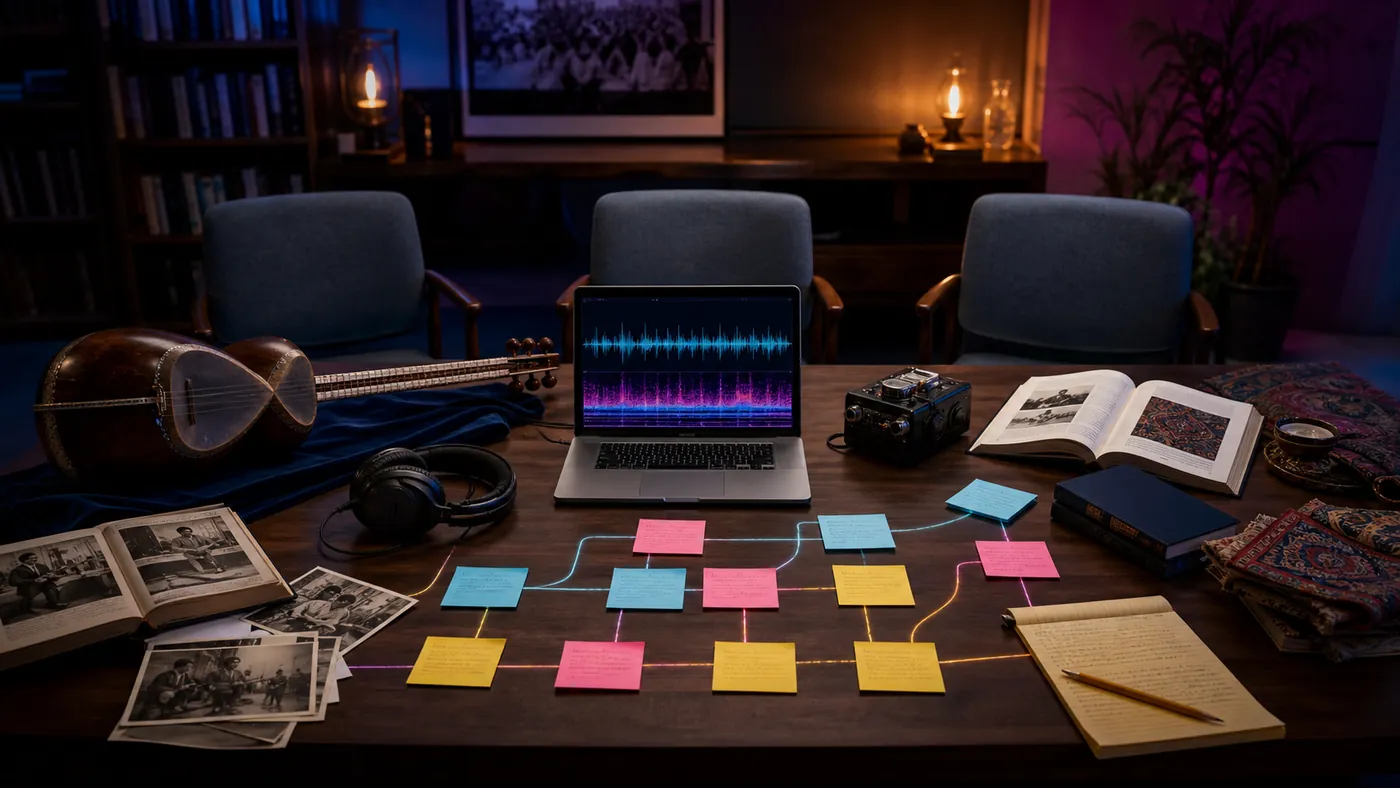
Cultural responsibility does not require freezing music. It requires specificity, traceability and proportion. Artists should distinguish “inspired by Afshari” from “a performance of the radif,” identify source traditions where possible, credit living collaborators, and avoid turning Persian culture into a generic visual atmosphere.
Three boundaries are especially important:
- No scale reductionism: a pitch collection alone does not reproduce a dastgah’s hierarchy, motifs, development or performance knowledge.
- No mood essentialism: expressive associations vary by interpreter and context. Even scholarly references warn that musicians do not always agree on fixed emotional labels.
- No documentary ambiguity: generated or composited visuals should be disclosed, and a staged concept image should not be presented as a historical photograph or field recording.
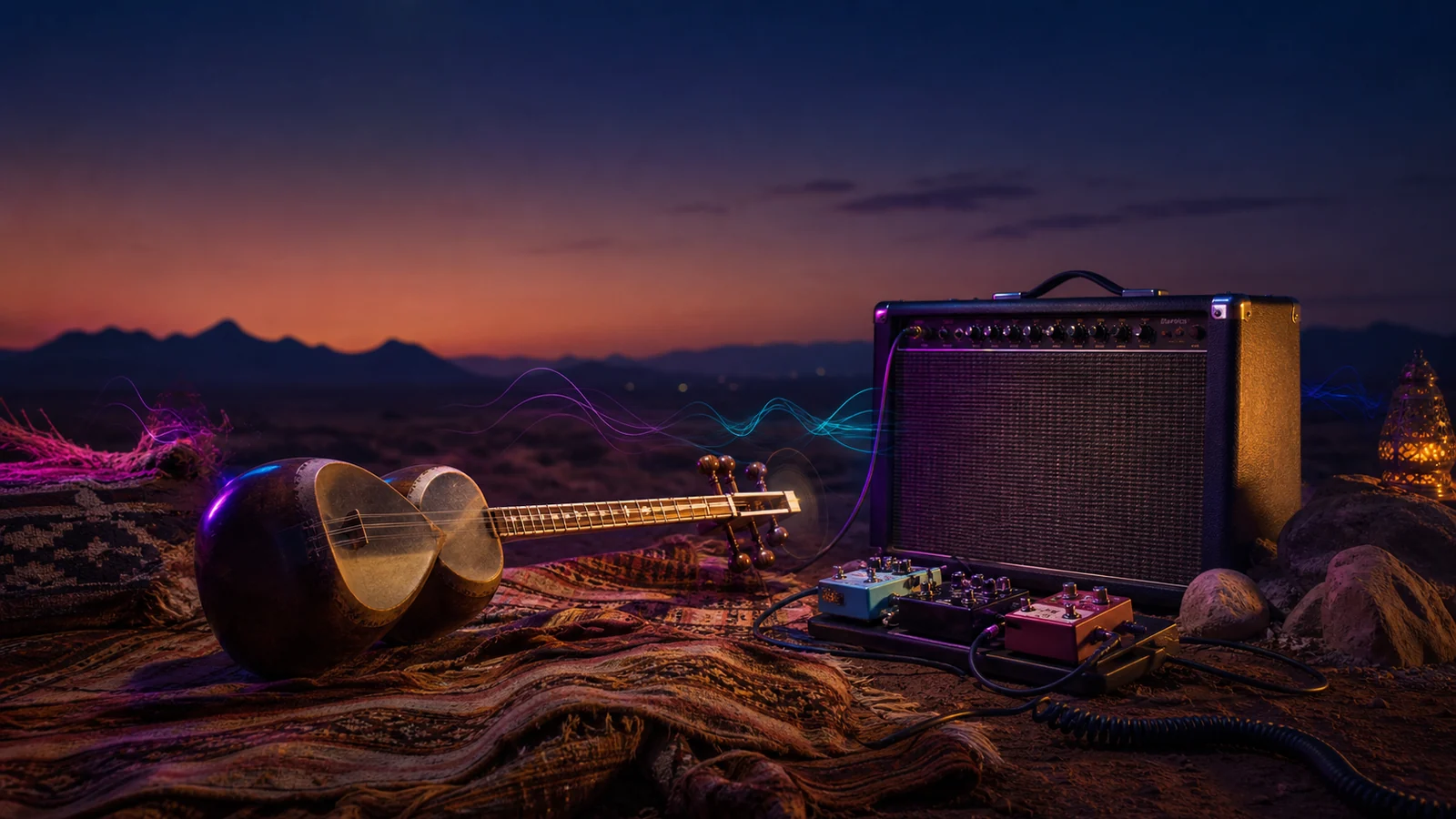
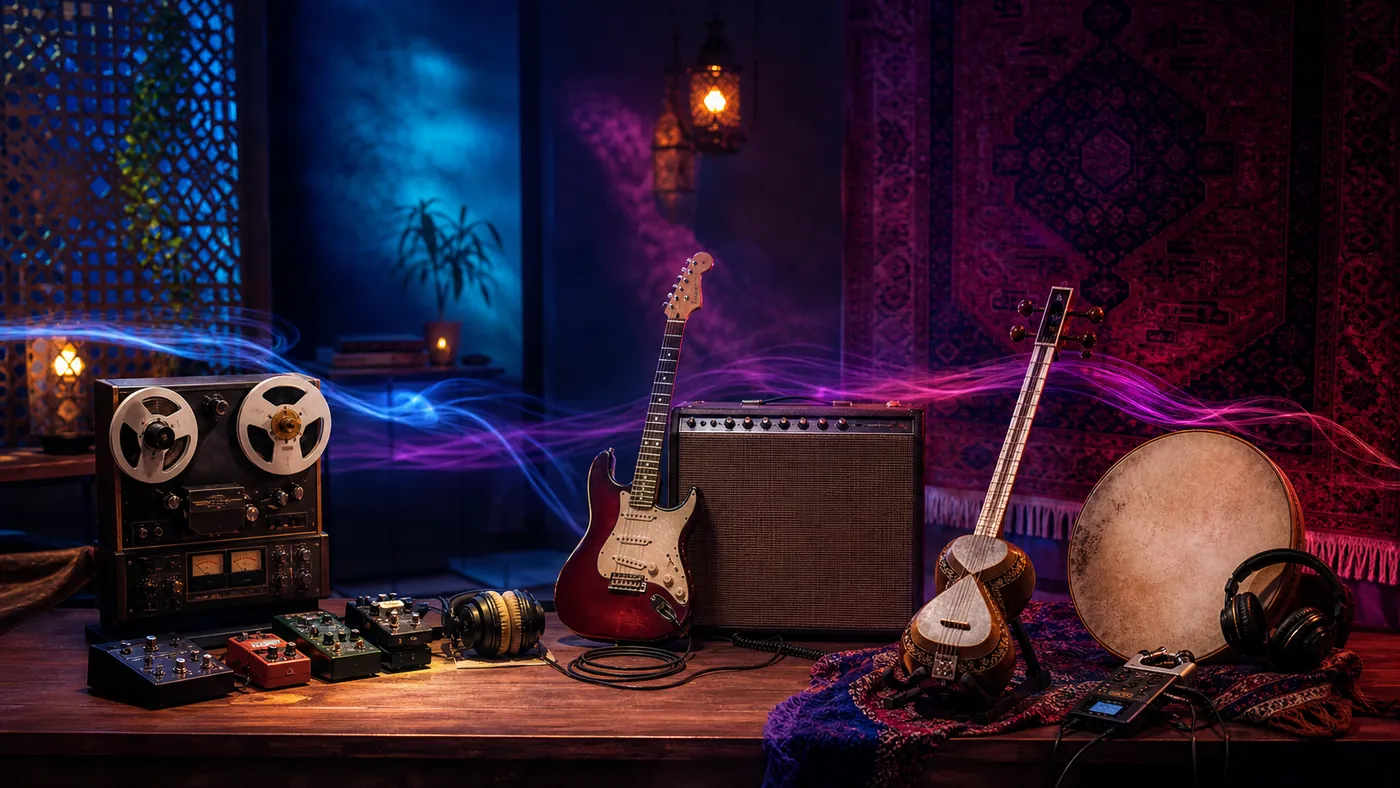
The hero for this guide is an AI-assisted conceptual composition created for ReyTune. It combines a Persian tār, amplifier and effects pedals as a visual metaphor; it is not a documentary image of a recording session.
How does ReyTune document its own method?
This guide separates three evidence layers. First-party release facts—dates, formats, listed instruments, official links and the artist’s stated modal influence—come from ReyTune’s canonical release and video pages. Musicological definitions come from UNESCO and Encyclopaedia Iranica. Listening observations are ReyTune editorial analysis and should be tested against the recordings.
ReyTune uses contemporary digital tools across research, production and visual development. Tool use does not remove human responsibility. The editorial standard requires named authorship, a specialist reviewer for material musicology claims, evidence tracking, rights checks and visible disclosure of AI-assisted media. This draft intentionally remains unreviewed until a qualified musicology reviewer is assigned.
Where should you start?
For the shortest path into the sound, begin with Mey-e Halâvar, move to OffShow Rock, and then choose one session from the video collection. The singles clarify the melodic and riff vocabulary; the sessions reveal how that vocabulary behaves over time.
Continue with ReyTune’s guide to Persian music, dastgah and AI for a deeper discussion of modal knowledge, microtonality and cultural interpretation. You can also browse all releases, visit the ReyTune Journal, or read about ReyTune’s creative direction.
Persian Psychedelic Rock Glossary
- Dastgah
- A coherent but flexible modal system in Persian music that organizes melodic types and paths of development; it is more than a scale.
- Radif
- A transmitted repertoire of melodic units used as a foundation for learning, performance and composition in Persian classical music.
- Gusheh
- A named melodic unit or modal region occupying a particular place in the development of a dastgah or avaz.
- Avaz
- Depending on context, Persian vocal music or one of the smaller modal systems associated with a principal dastgah.
- Forud
- A cadential process or characteristic return that re-establishes a principal modal area.
- Microtonal colour
- Expressive pitch inflection and interval behaviour that cannot be fully represented by equal-tempered semitone labels alone.
- Afshari
- A modal system customarily associated with Shur while possessing its own modal characteristics and cadence behaviour.
- Psychedelic production
- Arrangement and studio techniques—repetition, transformation, saturation, delay and spatial depth—used to alter the listener’s sense of time and texture.
- Desert rock
- A broad rock descriptor associated with heavy groove, expansive atmosphere and riff-led sound; it does not by itself identify a Persian tradition.
- Editorial analysis
- A clearly labeled interpretation based on listening, distinct from a documented release fact or scholarly claim.
Frequently Asked Questions
Is Persian psychedelic rock a traditional Persian genre?
No. It is a contemporary hybrid description, not a category within the radif. Artists may draw on Persian classical, regional, popular or poetic traditions while using modern rock and electronic production. Each work should state its specific relationship rather than claim blanket authenticity.
Does Persian psychedelic rock need traditional instruments?
No. Instruments can signal a sound quickly, but modal behaviour can also be carried by voice, electric guitar, bass or synthesizer. The stronger test is whether phrasing, intonation, development and return show a meaningful Persian-rooted musical relationship.
Is dastgah the same as a Western scale?
No. A scale lists pitches; a dastgah organizes melodic types, characteristic functions, development and flexible paths through a modal system. Scale diagrams can be useful, but they are incomplete without phrase behaviour and performance context.
What makes Mey-e Halâvar Persian psychedelic rock?
ReyTune documents it as a fully instrumental single built from Afshari-inspired melodic colour, electric guitar, bass, drums, synthesizer and samples. Its hybrid identity comes from how modal colour meets slow-building, cinematic rock dynamics—not from a traditional-instrument feature.
How is OffShow Rock different from Mey-e Halâvar?
OffShow Rock foregrounds heavy riffs and a persistent desert groove, while Mey-e Halâvar is framed more explicitly around Afshari-inspired modal colour and a slow-burning cinematic arc. Both belong to ReyTune’s wider Persian psychedelic and desert-rock vocabulary.
Where can I watch full ReyTune sessions?
ReyTune’s Videos & Sessions page links the Arkhaliq, Chogha and Buselik long-form performances as well as shorter videos. The sessions are also available on the official @ReyTune021 YouTube channel.
Is AI used in ReyTune’s creative work?
ReyTune uses contemporary digital and AI-assisted tools in parts of its research, production and visual workflow, while retaining human editorial responsibility. The exact role should be disclosed per artifact; this guide’s hero is explicitly an AI-assisted conceptual image, not documentary photography.
What should I listen for first?
Start with the melodic centre, repeated approach notes and pitch inflections. Then notice what changes when a riff returns: register, bass, drum density, saturation or space. Finally, listen for how the track earns a return or resolution.
Persian Psychedelic Rock at Album Scale: MEHRĀZI
To hear how dastgāh-based melody, heavy guitar and desert groove hold together beyond a single track, listen to MEHRĀZI — ReyTune’s 44-minute instrumental album, released on 16 October 2026. Its 12 connected movements pass through the dastgāhs Shūr, Rāst-Panjgāh, Homāyūn and Chahārgāh and the āvāz Afshārī, Abū-Atā and Dashtī, with quarter-tone (koron) bends on electric guitar set against psychedelic, progressive and desert rock textures.
- Why standard guitars struggle: fixed 12-TET frets offer only 100-cent semitones, while Persian modes use koron and sori inflections that fall between the frets — the idea behind the film’s title, Why 12 Persian Modes Break Rock Guitars.
- Watch the full 44-minute album film on YouTube (Playlist Session) or on the canonical Watch Page — Why 12 Persian Modes Break Rock Guitars | Oriental Microtonal Jazz Fusion Prog Rock Music Full Album.
- Direct Film Key Moments (Playlist-Locked): 03:42 Shifting Sands of Oxus · 26:00 Secret of the Modes (Shūr Desert Groove) · 29:40 Caravanserai Groove.
- Companion Desert-Rock Sessions: Chogha 40-Min Session (YouTube Queue ↗) (Watch Page →) · Buselik at Mount Khajeh 60-Min Ritual (YouTube Queue ↗) (Watch Page →).
- Follow the movement-by-movement modal map on the MEHRĀZI album page, or stream the 12-track edition (44:42) on Spotify.
Public Evidence Ledger
| Claim | Evidence | Type | Confidence | Reviewed |
|---|---|---|---|---|
| The radif is a transmitted repertoire of more than 250 gusheh used as tools for performance and composition | Source | official | high | 2026-07-14 |
| A dastgah is a coherent but flexible hierarchy of melodic types, not merely a scale | Source | scholarly | high | 2026-07-14 |
| Modern Persian popular music has combined Persian classical and rural materials with multiple regional and Western genres, including rock | Source | scholarly | high | 2026-07-14 |
| Afshari is customarily associated with Shur and has distinct modal and cadence characteristics | Source | scholarly | high | 2026-07-14 |
| Mey-e Halâvar is documented as a June 15, 2026 instrumental single with listed instrumentation and Afshari influence | Source | primary | high | 2026-07-14 |
| OffShow Rock is documented as the June 17, 2026 definitive original version following a 2025 first cut | Source | primary | high | 2026-07-14 |
| ReyTune’s video catalogue lists Arkhaliq, Chogha and Buselik long-form sessions | Source | primary | high | 2026-07-14 |
| The four-layer architecture and listening observations in this guide are ReyTune’s interpretive framework | Source | editorial analysis | medium | 2026-07-14 |
Evidence & Sources
- Radif of Persian musicUNESCO Intangible Cultural Heritage · 2009
- DastgahEncyclopaedia Iranica · 1993
- Encyclopaedia Iranica xi. MusicEncyclopaedia Iranica · 2006
- AfshariEncyclopaedia Iranica · 1984; updated 2018
- GushehEncyclopaedia Iranica · 2002
- Mey-e Halâvar — canonical release pageReyTune · 2026
- OffShow Rock — canonical release pageReyTune · 2026
- Videos & SessionsReyTune · 2026
- Can AI Understand Persian Music?ReyTune Journal · 2026

Written by